
Getting Daggett County Court Records
No one local site carries every Daggett County court record. For a public case history, Utah Courts Xchange is the best first stop. It also links to public documents you can buy. Parties in eligible cases can use free MyCase access instead. Anything missing online belongs to the office that serves the court. The Daggett County Clerk performs clerking duties for the Eighth District Court. The Daggett County Justice Court answers its own citation, small claims, hearing, payment, and local case questions.
Match each channel to its real purpose. A phone call can confirm the court, its address, the fee, and how to submit. Yet it never counts as a document order. Visiting in person may permit inspection or a public terminal where one exists. The Utah Judiciary request form covers inspection and copy requests sent to the responsible court. It can be mailed once the court confirms the destination. Fax or email delivery carries a rule-based fee. Records already offered through Xchange are excluded from that route.
- Identify Manila District Court or Daggett County Justice Court, then note the case number, filing year, case type, and requested document.
- Check Utah Courts Xchange, or use MyCase only when entitled to party access.
- Call the district clerk route at 435-784-3154 or Justice Court at 435-784-3216 to confirm custody and delivery options.
- Request inspection or copies at the counter, or submit the judiciary form by the method the responsible clerk confirms.
- Approve any staff-search, delivery, copy, or certification charge before the work begins.
Daggett Court Record Request Form
The Utah Courts record-request instructions lay out the public request path and note that a response usually arrives within ten business days. Describe the material you want with reasonable detail. Giving the court location, case number, record type, and a date range cuts staff research time and lowers the chance the clerk pulls the wrong file.
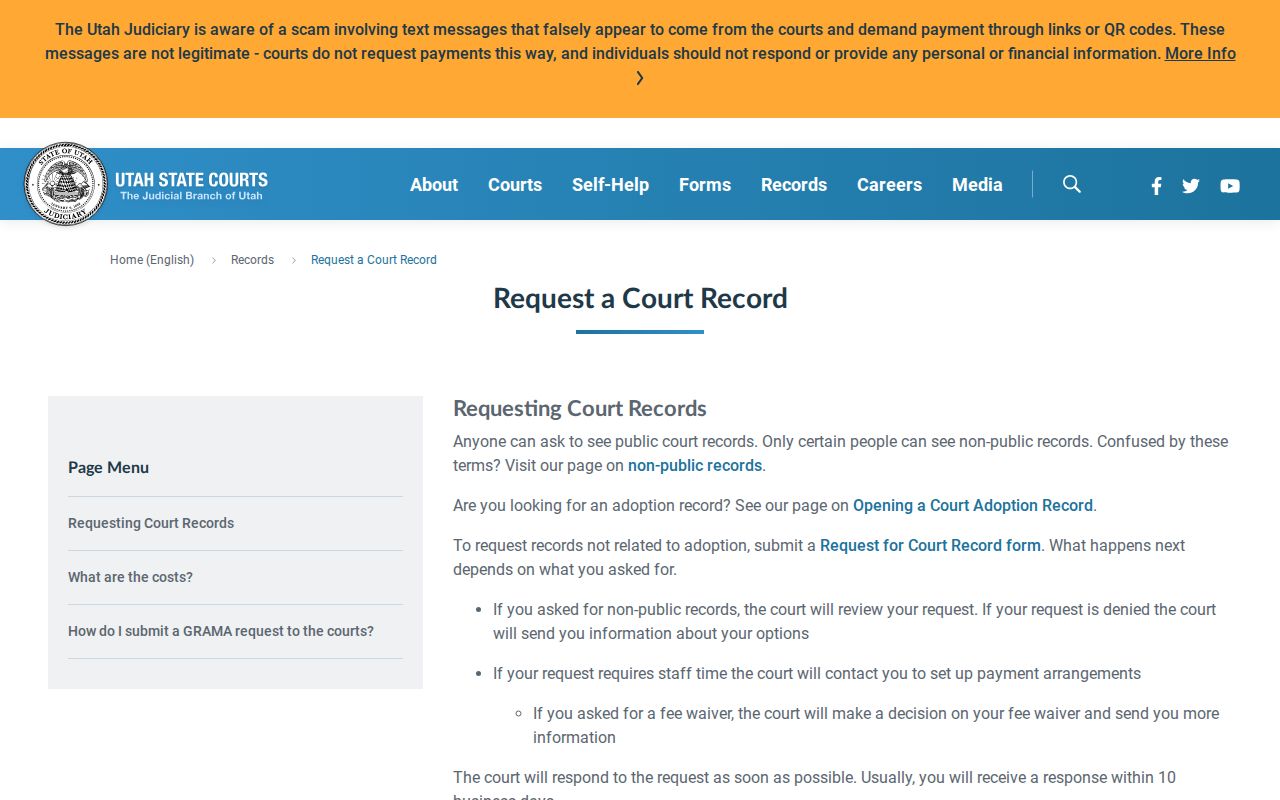
On the form, inspection and copies are separate choices. There is room to explain a claimed right to nonpublic material. An expedited-response option ties the request to public benefit. A name, mailing address, daytime phone, date, and signature complete the request. Checking the expedited box guarantees nothing. The court still reviews classification and the basis supplied.
Court Record Types
Think of a case history as the index layer. It lists court events and may point to documents. But it is never the whole file. A calendar is narrower still. It shows what is scheduled, not every filing or the final result. Naming the layer you need in a Daggett County record request helps the clerk. It lets the clerk quote a fee and pick a response method.
- Case histories with parties, roles, proceedings, dates, and disposition entries
- Filed pleadings, motions, notices, orders, judgments, and available exhibits
- Minute entries and records of a hearing or other court action
- Financial account entries for fines, fees, payments, and balances when accessible
- Certified or exemplified copies, transcripts, audio, and video requested as separate products
- Older paper or scanned files whose online coverage may be incomplete
Xchange coverage for Manila and Daggett begins April 7, 2000. That date marks searchable-system coverage only. It does not mean older Daggett County court records are gone. Pre-coverage files may simply require direct clerk research. Electronic public district documents filed since July 2010 are generally easier to reach. Access still varies with case type, date, and classification.
Two Daggett Record Desks
Daggett County splits the work between two desks. The county Clerk page lists Vicki Tanner as Deputy Clerk and Eighth District Court Clerk. It says the County Clerk supplies district clerking services. The local Justice Court holds the limited path. That path covers Class B and C misdemeanors, infractions, traffic matters, and small claims. Address a request to "Daggett court" alone and it can land at the wrong desk.
The Utah District Court overview shows why the split matters. District courts hold general jurisdiction over felony, civil, domestic, probate, and other matters. Justice courts handle a narrower case range. Before sending money or sensitive details, confirm which court appears in the case header. Juvenile social and legal records are generally nonpublic. They run through the Eighth District juvenile system, not an open Daggett search.
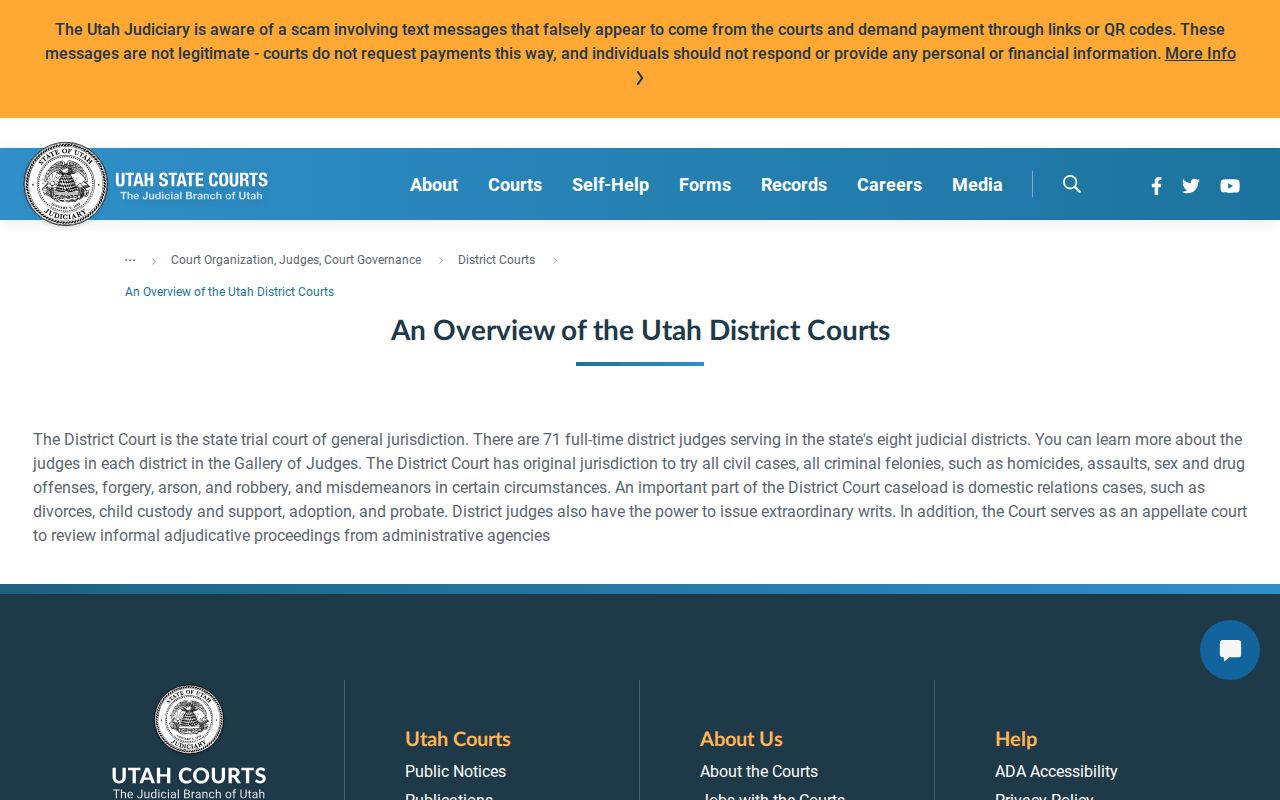
That district overview helps route felony, civil, domestic, and probate files to the general-jurisdiction court instead of the Justice Court desk. The Utah Justice Court overview covers the limited tier where misdemeanors, infractions, and small claims live.
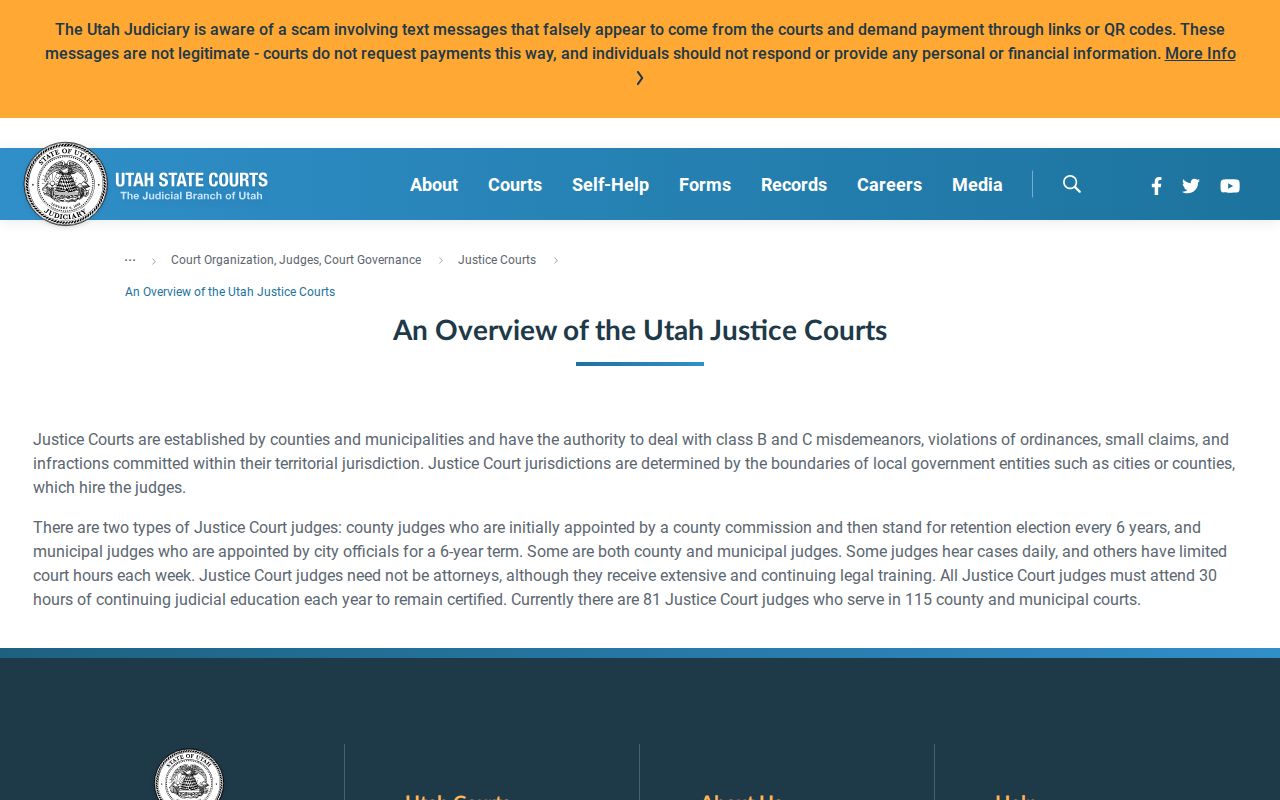
The limited scope explains the split in practice. A Daggett citation or small-claims record follows one local contact route, while an Eighth District felony or general civil file follows another.
Utah Courts separately publishes the street as 95 North 100 West. Call ahead so the clerk can verify the current entrance and confirm whether a local public terminal is available.
Inside a Daggett County Court Record
The public case history opens with the court, location, case type, case number, and filing date. More detail may follow. Parties and role codes, counsel, the assigned judge, charges or claims, and a chronological account of proceedings can all appear. The document file sits behind that index. A link marked available may still need a separate purchase. A missing link does not prove the filing was never made.
| Case Header | Court, Manila or Daggett location, case type, number, and filing date. |
|---|---|
| People and Roles | Names as filed, party codes, counsel, and the currently assigned judge. |
| Proceedings | Hearings, minute entries, filing events, pleas, rulings, and other dated case-history entries. |
| Orders and Judgments | Judicial directions and outcome records, subject to classification and document availability. |
| Account Entries | Fine, fee, revenue, trust, payment, or balance fields when the access role permits them. |
| Underlying Documents | Pleadings, motions, notices, orders, judgments, and other images or files available separately. |
Do not treat a filing date as a hearing date, judgment-entry date, or disposition date. An account balance, likewise, is not automatically the judgment amount. Read each label with its date. The full Daggett County case lookup process can help you find the right number. Ask for a copy only after you have it.
Daggett Xchange Record Limits
Xchange is a paid index, not a warehouse of free copies. Filter options cover jurisdiction, case number, name or company, case type, search scope, birth date, citation number, location, and several date ranges. A result may offer a summary or an extended case history. Opening a linked public document can cost extra. MyCase plays a different role entirely. It gives free, identity-verified access to parties and other eligible users, so it is not an anonymous public name search.
The Utah court-record fee rule treats online searches, document purchases, copies, and staff work as separate charges. Search narrowly before paying. If a Daggett County result is missing, check the court location, the spelling, the case type, the date range, and pre-2000 coverage. A sealed, expunged, juvenile, private, or protected classification can also explain the gap.
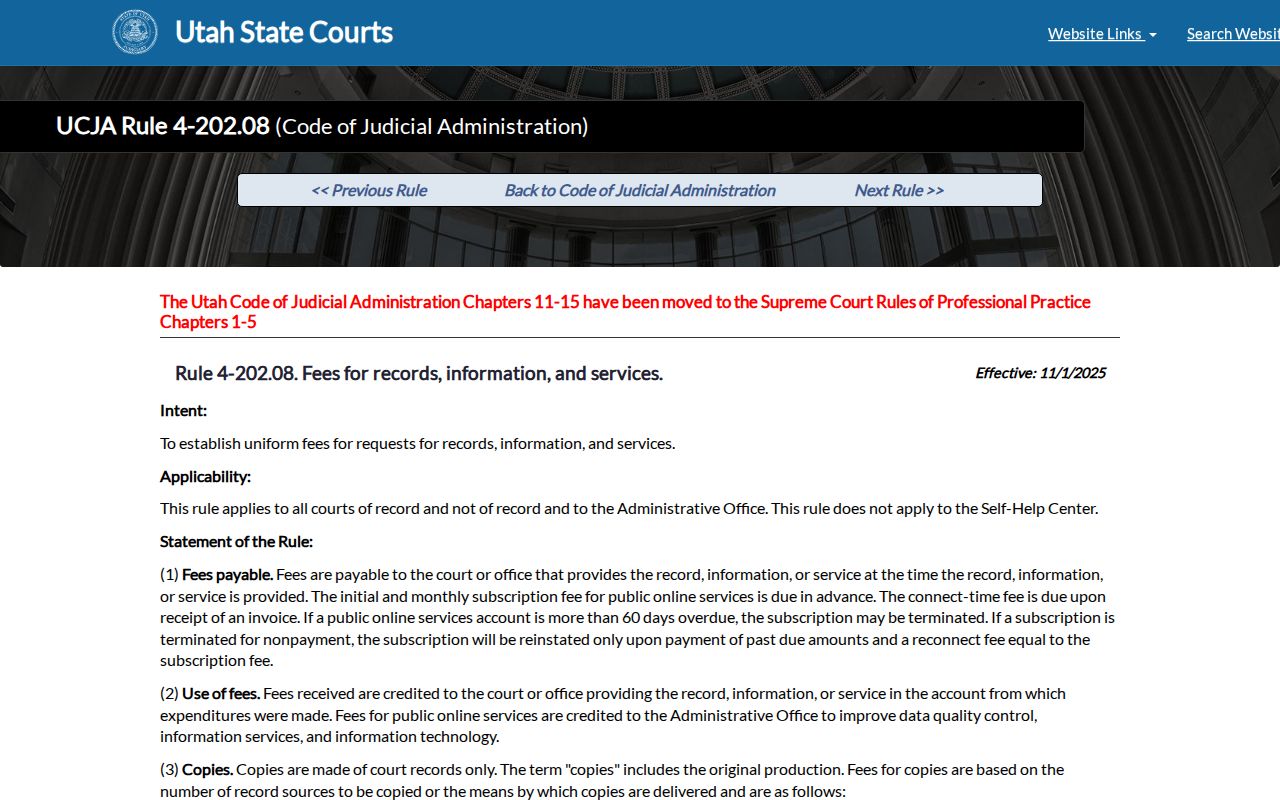
The rule's categories separate a search charge from a document charge and a certified-copy charge. Treat them as three distinct fees.
Fees and Certified Copies
A plain copy just reproduces the record. A certified copy adds a clerk's authentication, and an exemplified copy carries a more formal one. The judiciary's current schedule and Daggett County's county-document schedule are separate sources. Before authorizing any work on a Daggett County court record, ask one thing. Which schedule controls the exact item?
| Utah Court Record Item | Published Amount |
|---|---|
| Paper copy | $0.25 per sheet |
| Certified copy | $4 per document plus $0.50 per page |
| Exemplified copy | $6 per document plus $0.50 per page |
| Electronic media | $15 per unit |
| Fax or email | $5 through 10 pages, then $0.50 per page |
| Mail delivery | Actual cost |
| Staff time | First 15 minutes free, then least-cost appropriate staff rate |
The Utah Courts fee page posts the current certification amounts along with transcript charges. Schedules can change, so check it when you make the request.
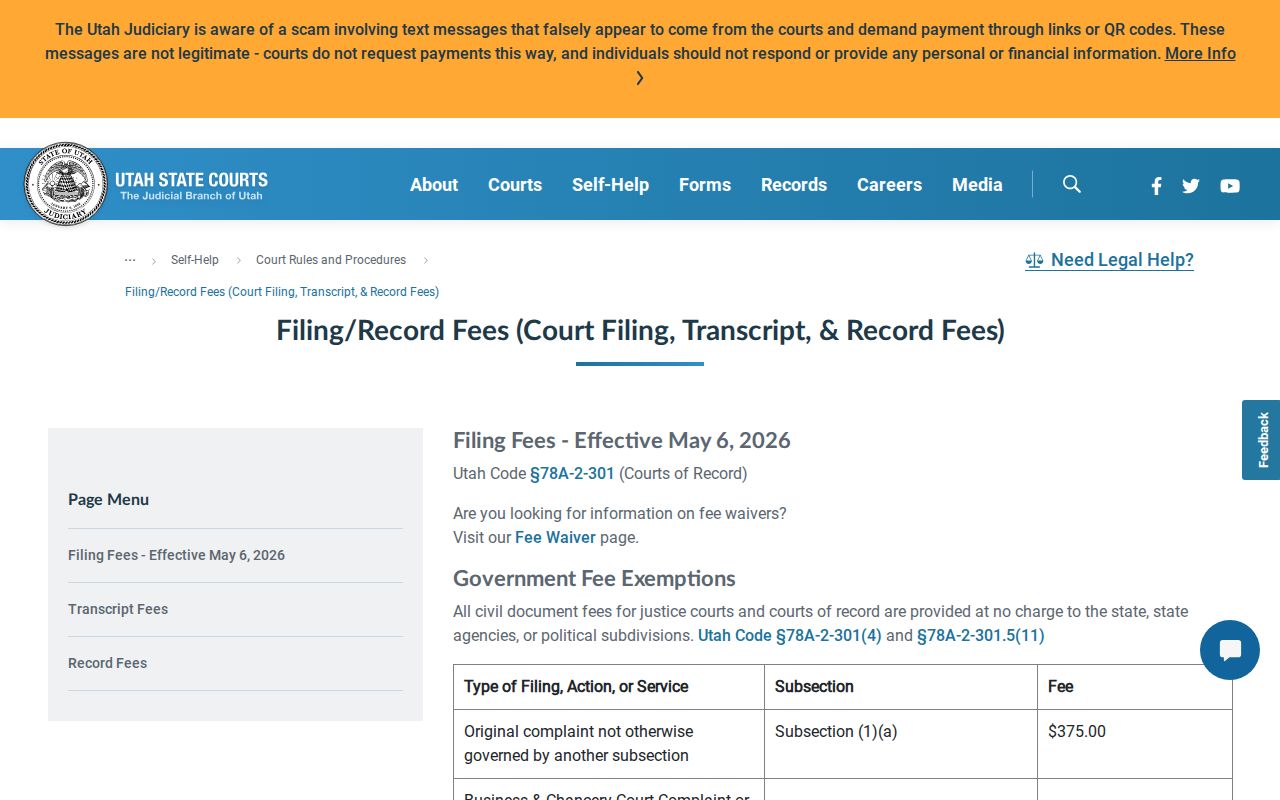
Daggett County keeps its own schedule covering county copy, certification, mailing, fax, and GRAMA-search figures. A clerk can tell you whether the judiciary fee or the county schedule applies.
GRAMA Is Not Court Records
Two different laws govern two different record systems. Daggett County's NextRequest portal handles county administrative records under Utah's Government Records Access and Management Act. The Utah Judiciary request form covers judicial records. The court-record rules govern that route. The routes share a courthouse building, but they are not interchangeable. Want a pleading, order, minute entry, or case recording? Start with the responsible court. County agency correspondence or other administrative material may belong in a GRAMA request instead.
The Daggett County GRAMA page spells out the county route and its NextRequest implementation. It does not turn the county records vendor into a court docket portal.
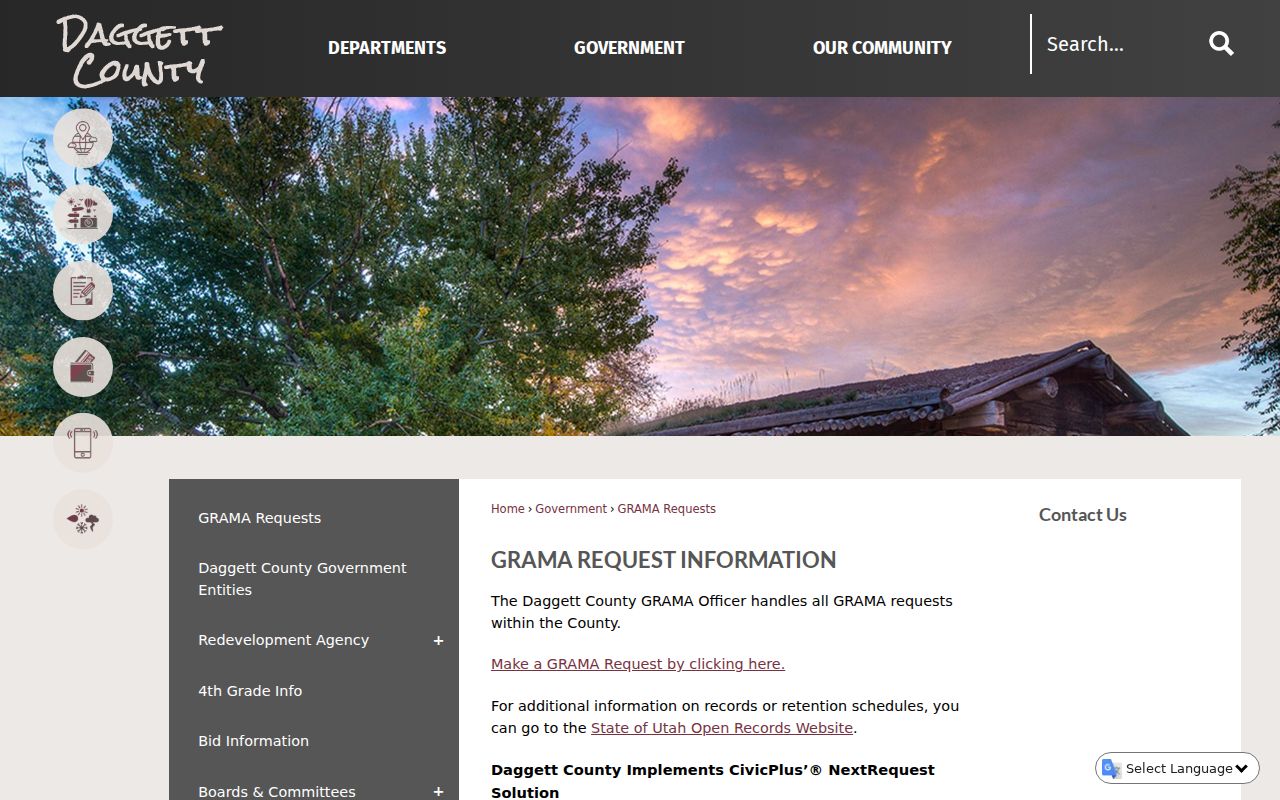
Picking the right channel saves delay and gets the correct access rules and fee schedule applied.
Sealed Records and Public Access
Most Utah district, justice, and appellate court records start out public. That access is not absolute. Utah uses four main labels: public, private, protected, and sealed. Some files stay partly open. A public case history, hearing, order, or judgment showing while a pleading or personal detail stays restricted. Juvenile social and legal files never belong in an ordinary public search. Nor do adoption material, expunged cases, or sealed documents.
Asking for nonpublic material requires a stated basis. It also requires court review. Even a party may need a court order for a sealed record. Filers must redact protected personal identifiers from public filings, and the clerk does not take over that job just because someone requests a copy.
Utah court-record rules:
UCJA Rule 4-202.02 classifies court records as public, private, protected, or sealed.
UCJA Rule 4-202.03 states who may access public and nonpublic record categories.
UCJA Rule 4-202.06 governs ordinary and expedited request handling.
Daggett Record Classification Check
Classification can attach to a whole file or to a single part of it. The Utah Courts nonpublic filing page gives examples and explains personal-identifier redaction.
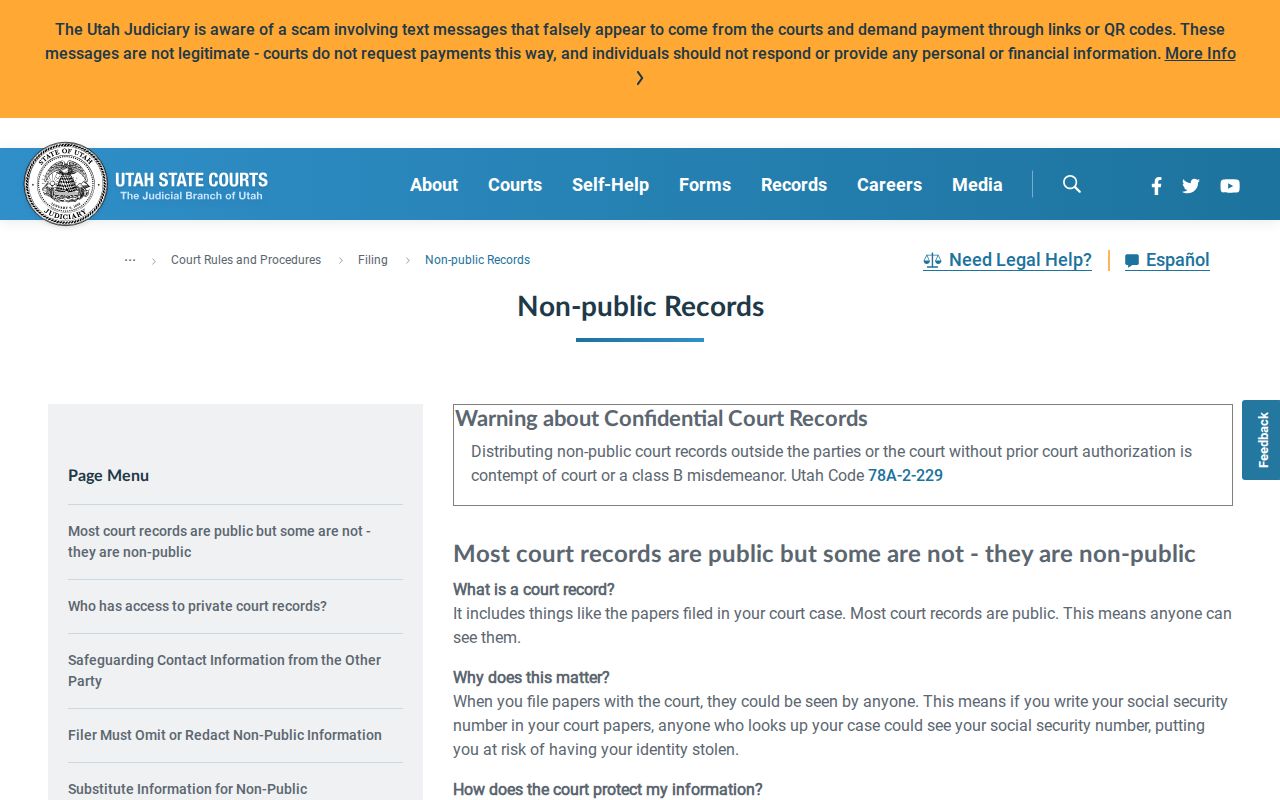
Suppose a public case history lists an event. No document opens. Do not assume an error. The document may need purchase, may predate electronic images, or may carry a restricted classification. Give the clerk the exact entry date and document label. Do not request the entire file. That narrow question works better and limits exposure of sensitive data.